🔭 𝐎𝐒𝐒𝐄𝐑𝐕𝐀𝐓𝐎𝐑𝐈𝐎 𝐎𝐍𝐓𝐎𝐋𝐎𝐆𝐈𝐂𝐎
𝐋𝐀 𝐅𝐎𝐑𝐌𝐈𝐍𝐀 𝐄 𝐋𝐀 𝐒𝐀𝐁𝐁𝐈𝐀: 𝐂𝐎𝐒𝐀 𝐑𝐄𝐒𝐓𝐀 𝐃𝐈 𝐍𝐎𝐈 𝐎𝐋𝐓𝐑𝐄 𝐈𝐋 𝐓𝐄𝐌𝐏𝐎?
Quando si riflette sulla continuità della coscienza oltre la vita biologica, l’equivoco più frequente nasce dal confondere il soggetto con la sua singola maschera anagrafica. Il nome, il cognome, le abitudini quotidiane e i dettagli superficiali appartengono all’involucro temporaneo: per tutto ciò che resta in superficie, la fine è reale e definitiva.
Eppure, un fenomeno identico accade già all’interno di una singola esistenza terrena. Chiunque si guardi indietro ricorda con nitidezza alcuni passaggi decisivi dell’infanzia o della giovinezza, mentre migliaia di giorni ordinari sono svaniti completamente dalla memoria. Quei giorni dimenticati non sono stati vissuti da un estraneo: il soggetto che li ha attraversati è sempre lo stesso, ed è la sintesi viva di tutte quelle stagioni senza coincidere più con nessuna di esse in particolare.
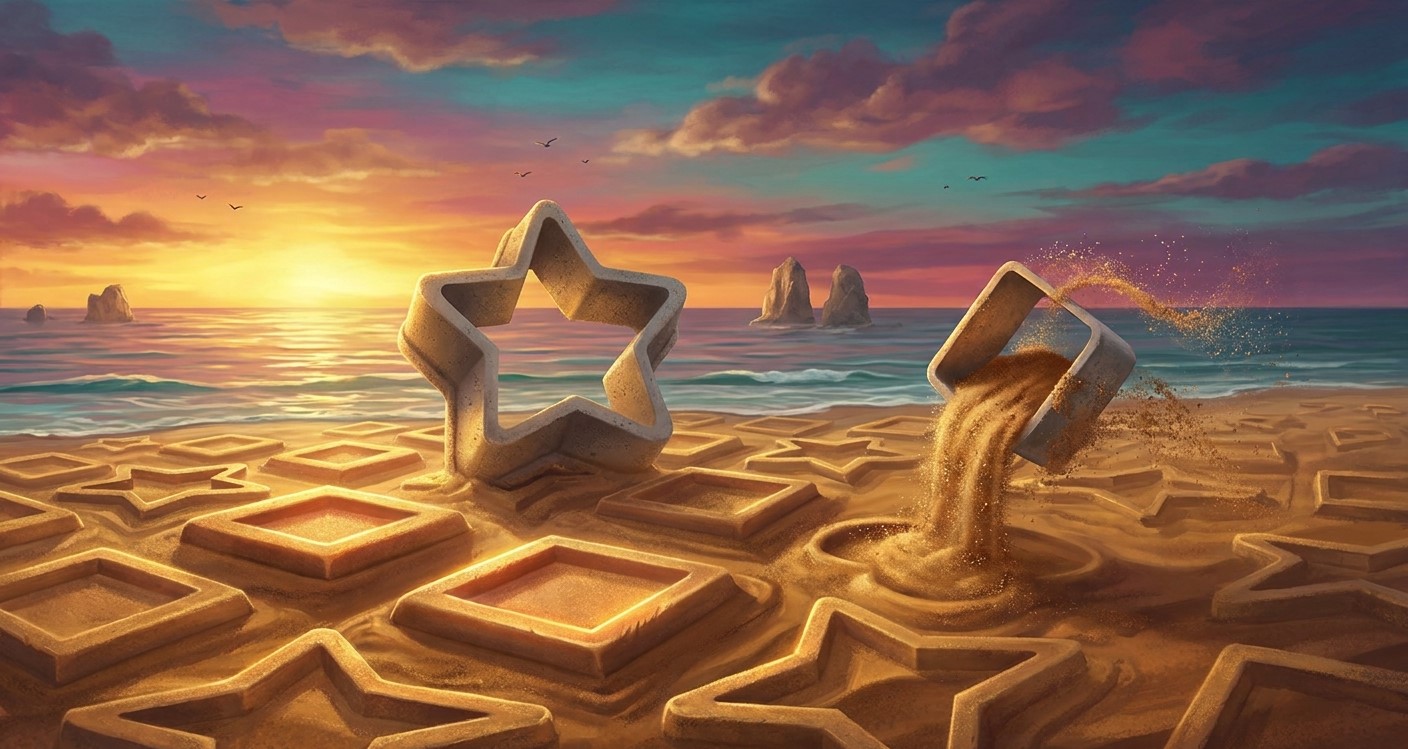
La coscienza individualizzata opera esattamente come una formina per fare le figure sulla sabbia: la formina è sempre la stessa, mentre ogni esistenza è la sabbia. Se la sabbia è asciutta — cioè se una vita scorre nell’automatismo, senza intensità né consapevolezza — quando si solleva la formina non resta alcuna traccia. Se invece la sabbia ha consistenza — perché le esperienze sono state vissute con vera pregnanza ed elaborazione interiore — sulla tavola resta un’impronta precisa.
Al di là della forma fisica non scompare il soggetto: resta l’insieme cosciente di tutti i nomi e di tutte le esperienze che hanno generato spessore, pur non identificandosi più con alcun singolo volto terreno. È questa sintesi maturata a mantenere l’individuo eternamente vivo e distinto.
[Illustrazione: La formina-stampo — la coscienza profonda — lascia una scia di impronte nitide dove la sabbia delle esistenze ha consistenza e consapevolezza; dove invece la sabbia è troppo asciutta o troppo liquida, non resta alcuna forma.]
🔭 𝐎𝐍𝐓𝐎𝐋𝐎𝐆𝐈𝐂𝐀𝐋 𝐎𝐁𝐒𝐄𝐑𝐕𝐀𝐓𝐎𝐑𝐘
𝐓𝐇𝐄 𝐌𝐎𝐋𝐃 𝐀𝐍𝐃 𝐓𝐇𝐄 𝐒𝐀𝐍𝐃: 𝐖𝐇𝐀𝐓 𝐑𝐄𝐌𝐀𝐈𝐍𝐒 𝐎𝐅 𝐔𝐒 𝐁𝐄𝐘𝐎𝐍𝐃 𝐓𝐈𝐌𝐄?
When reflecting on the continuity of consciousness beyond biological life, the most common misunderstanding arises from confusing the subject with its single biographical mask. First name, surname, daily habits, and superficial details belong to the temporary vessel: for everything that remains on the surface, the end is real and final.
Yet an identical phenomenon already occurs within a single earthly lifetime. Anyone looking back vividly remembers certain decisive moments from childhood or youth, while thousands of ordinary days have completely faded from memory. Those forgotten days were not lived by a stranger: the subject who passed through them is always the same, representing the living synthesis of all those seasons without being reduced to any single one in particular.
Individualized consciousness operates just like a mold used to shape figures in the sand: the mold is always the same, while each existence is the sand. If the sand is dry—meaning a life drifts along on autopilot, without intensity or awareness—when the mold is lifted, no trace remains. If, however, the sand has consistency—because experiences were lived with genuine depth and inner processing—a clear imprint remains on the board.
Beyond physical form, the subject does not vanish: what endures is the conscious whole of every name and every experience that generated substance, even while no longer identifying with any single earthly face. It is this matured synthesis that keeps the individual eternally alive and distinct.
[Illustration: The stamp-mold—deep consciousness—leaves a trail of crisp imprints where the sand of lived existences has consistency and awareness; where the sand is too dry or too liquid, no shape remains.]